Interwoven — 縄文の手 (Jōmon no Te)
A collection inspired by ancient Japanese pottery
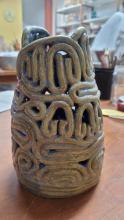
This collection was born at a time when I needed to slow down. Working calmly, with my hands, helped me listen to what was inside. Each piece was shaped by me using the coil-building technique, which has been used for thousands of years in Japan, during the Jōmon period. It's a way of working that asks for patience, repetition, and presence.
The name “Interwoven” came from what I felt during the process — each coil of clay connecting to the next, each gesture flowing into another. It felt like I was stitching memories, feelings, and days together. The first piece in this collection was a big challenge for me. I took my time. I started over. I got frustrated… but I kept going. The footage shows the final part of the process, recorded in the studio, unedited, just as it happened. Each piece has its own story. But they all carry the same spirit: respecting time. The time of the clay. The time of the hands. The time within.
Technique: coil building (hand-rolled clay)
São Bernardo do Campo / Brazil
More pieces are coming.
If you’d like to follow the process, visit: www.renatacatena.art.br